MODULE 3: Mobile Phone Content Creation
Study the content below.
LESSON 304: Framing and Composition
This will give you:
A solid understanding of the standards and practices of leading news agencies.
Once complete, move on to Lesson 305.
IN THIS LESSON
📐 Elevate Your Composition: Learn advanced framing techniques to craft visually compelling narratives that empower and represent African women effectively.
FRAMING HER STORY
Let's go deeper into the craft of visual storytelling with a focus on framing and composition techniques that will enhance the quality and impact of your gender-focused narratives.
Rule of Thirds
Ever wonder why some images instantly grab your attention? A big part of it is composition! Let's talk about the rule of thirds, a powerful tool for crafting visually compelling stories, especially when focusing on gender narratives.
Picture this: you divide your frame into nine equal sections by drawing two horizontal and two vertical lines. This simple grid is a game-changer. Positioning your subject – whether it's an influential woman you're interviewing, a group of girls participating in a workshop, or a symbol representing gender equality – along these lines or at their intersections creates a sense of balance and visual interest that draws the viewer in.
It's a fantastic way to add depth, dynamism, and a professional touch to your photography and videography, ensuring your audience connects with your subject and your message.
Leading Lines
Let's explore another powerful composition technique: leading lines. While the rule of thirds guides the placement of elements within your frame, leading lines use existing lines to direct the viewer's gaze into the frame and towards your subject.
Think of it this way: imagine roads stretching towards the horizon, a fence line receding into the distance, or the converging lines of a building's architecture. These are all examples of leading lines. They act as visual pathways, drawing the viewer's eye towards your main subject – whether it's a woman walking confidently towards her future, a group of activists marching for change, or a single object symbolizing progress.
Skillfully using leading lines adds depth and a sense of movement to your shots, creating a more dynamic and engaging composition. It also helps to emphasize the focus of your story, guiding the viewer's attention to the specific element you want them to see. For example, in gender-focused storytelling, leading lines can be used to direct the viewer's gaze towards:
A woman's determined expression: Leading lines can draw the eye directly to her face, emphasizing her strength and resolve.
A group of women working together: Leading lines can guide the viewer through the scene, highlighting the collaboration and collective power of the group.
A symbol of progress: Leading lines can draw attention to a specific object or detail that represents positive change or a step towards gender equality.
Unlike the rule of thirds, which is about dividing the frame, leading lines are about using existing lines to guide the viewer's eye and create a sense of depth and direction. By mastering both techniques, you can craft visually compelling stories that effectively convey your message and resonate with your audience.
Advanced Composition Techniques for Visual Storytelling
We've explored the rule of thirds and leading lines, but let's delve into three more subtle yet essential composition techniques: breathing room, looking room, and headroom. Breathing room is the space you give your subject within the frame. It's about avoiding a cramped or claustrophobic feel, allowing your subject to visually "breathe" and command the viewer's attention. In gender-focused storytelling, this can be a powerful way to convey respect and give your subject a sense of presence.
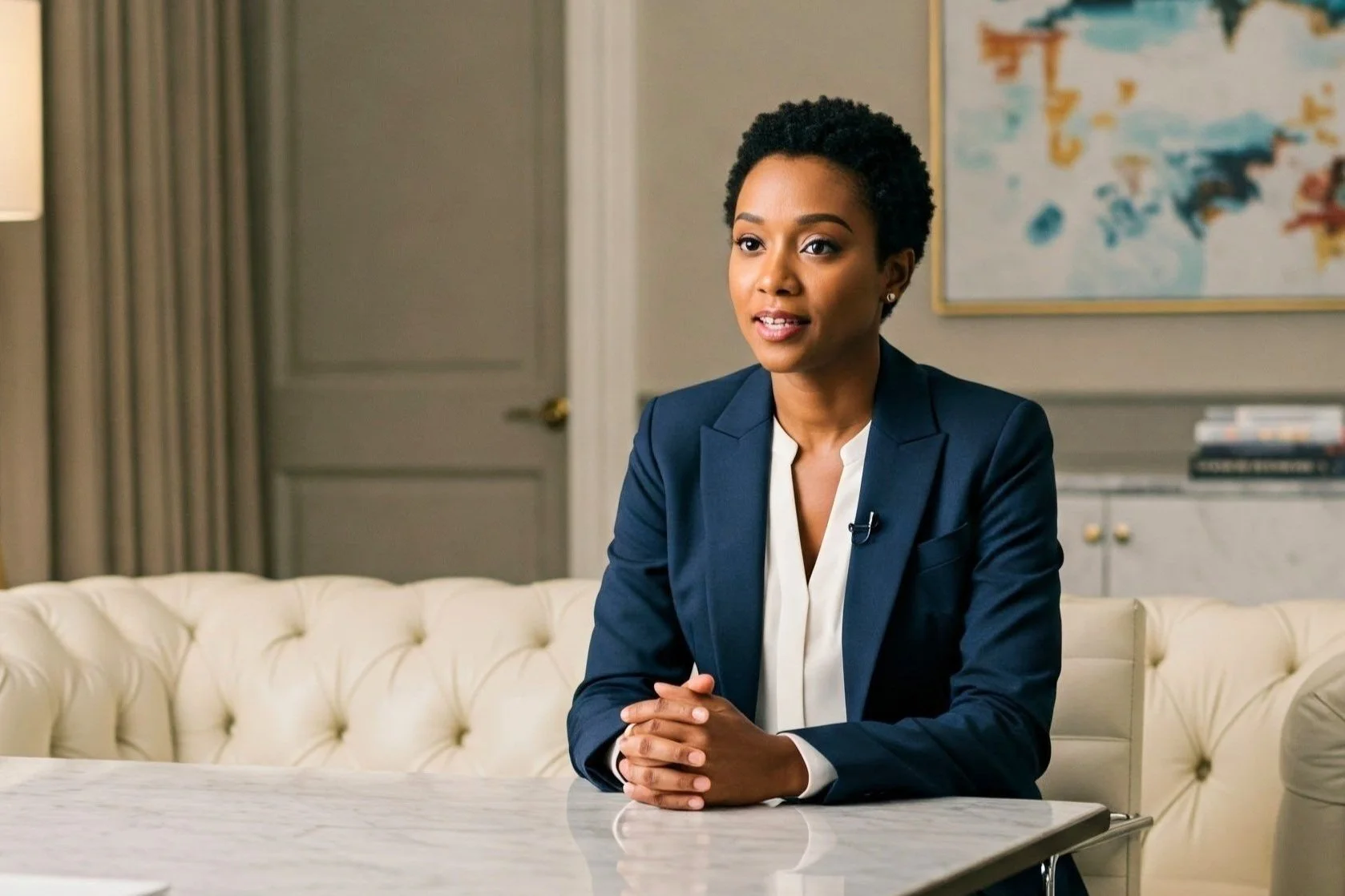
Looking room, especially important in interviews, which are essential for presenting a well-rounded narrative, is the space in the frame where your subject is looking. This is frequently because the interviewee is directing their gaze towards the interviewer.
As outlined in your storyboard, each story should include at least three interviews: a central character, an impact character, and an expert character. To provide variety in the edit, the expert and impact characters should be looking in the opposite direction from the main character. For example, if your central character is looking to the right, position them on the left side of the frame. This isn't just about aesthetics; it's about creating a natural and engaging visual flow. It guides the viewer's eye in a way that feels comfortable and intuitive, enhances the impact of your subject's words and expressions, and provides a subtle visual cue about the interview dynamic.
Headroom refers to the space between the top of your subject's head and the top of the frame. Why is it important? Because it directly affects how your subject is perceived. Strive for balance. In gender-focused storytelling, excessive headroom can make the women you're profiling appear diminished or insignificant, which can be counterproductive to your goals of empowerment and representation. Conversely, insufficient headroom can create a feeling of being boxed in or restricted. The aim is to create a visually appealing frame that highlights your subject's presence and authority without making them feel confined. Be mindful of headroom in each of these diverse interview setups to maintain a professional and consistent visual style.
Composition, at its heart, is the deliberate arrangement of visual elements within your frame to create compelling and impactful stories. It's the art of visual storytelling, and mastering these techniques will elevate your work to a new level.
Backgrounds for Impactful Interviews
When filming an interview, carefully select a background that enhances your subject and the story you're telling. For example, if you're interviewing the captain of a women's football team, showing other players training or a match in the background can add context and visual interest. However, ensure the background activity isn't directly behind the interviewee, as this can distract the viewer and pull focus away from her. Additionally, avoid placing the interviewee in front of a bright background, as this can create an unflattering silhouette and obscure important details.
Don’t Cross the Line
Imagine an invisible circle around your subject. The 180-degree line is an imaginary division of that circle, establishing your shooting angle. To maintain consistent screen direction and avoid disorienting the viewer, it's crucial to stay on one side of this line. People tend to establish a line with their gaze, so choose the side that provides the most compelling profile and best supports your narrative. Once you've established your line, maintain it throughout the interview or when filming B-roll and cutaways.