MODULE 3: Mobile Phone Content Creation
Study the content below.
LESSON 302: Lighting
This will give you:
A solid understanding of the standards and practices of leading news agencies.
Once complete, move on to Lesson 303.
IN THIS LESSON
🔆 Achieve Professional Lighting in Video Journalism: Learn to identify and utilize effective lighting strategies, including managing shadows and highlights, to produce high-quality, broadcast-ready footage.
Shine a Light on Her Success
The Power of Light
In gender-focused storytelling, the camera's iris is a powerful tool for shaping exposure and symbolic meaning.
By controlling the brightness of our shots, we can create the desired mood around the women we are featuring. Curating and capturing vibrant scenes featuring these inspirational women helps to evoke optimism, hope, and strength in the audience.
This approach contrasts with the gloomy, dark images often seen in stereotypical gender narratives that spread negativity and resignation.
Observe the differences in lighting, room setting, and clothing in the images below:
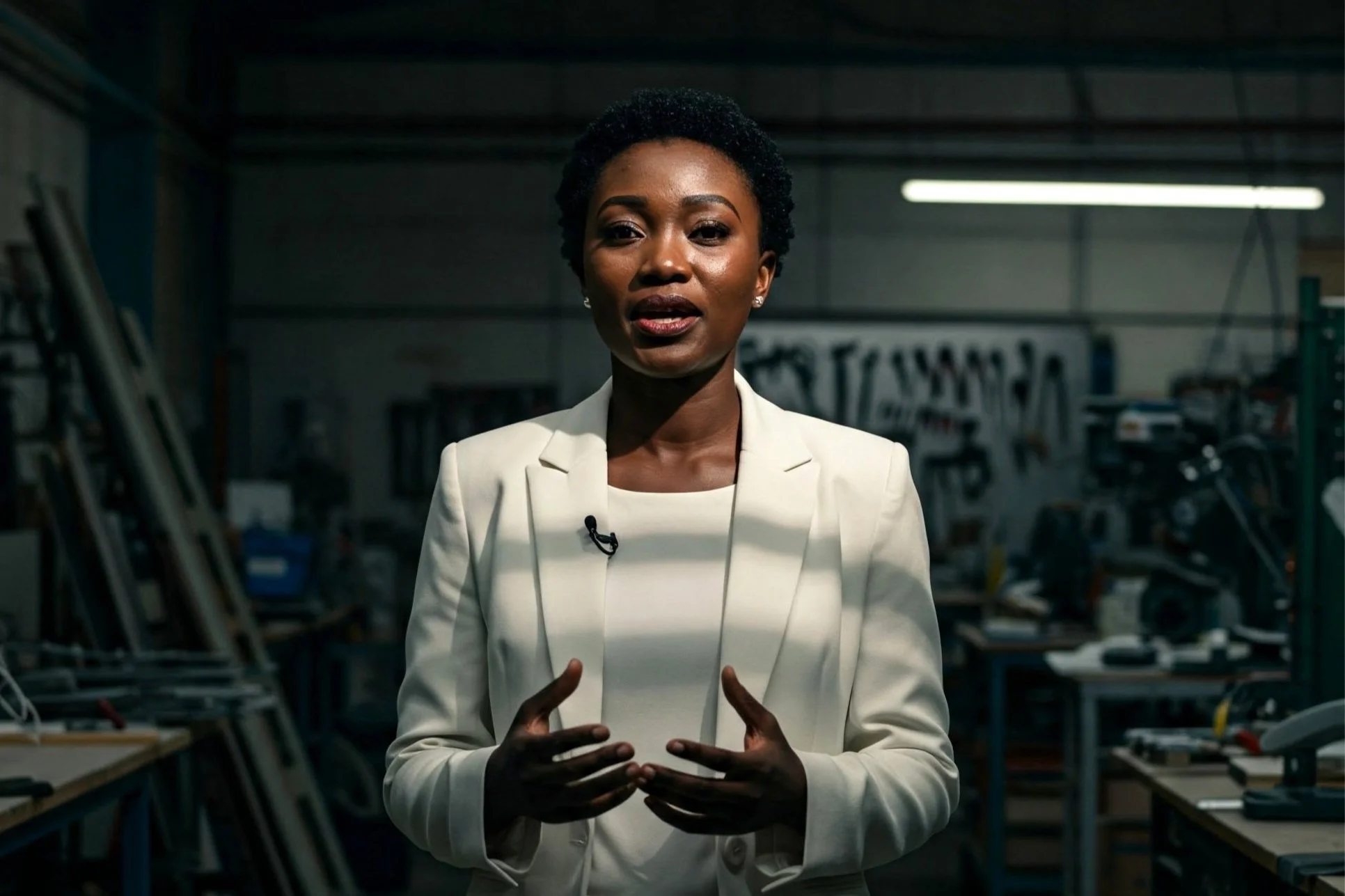
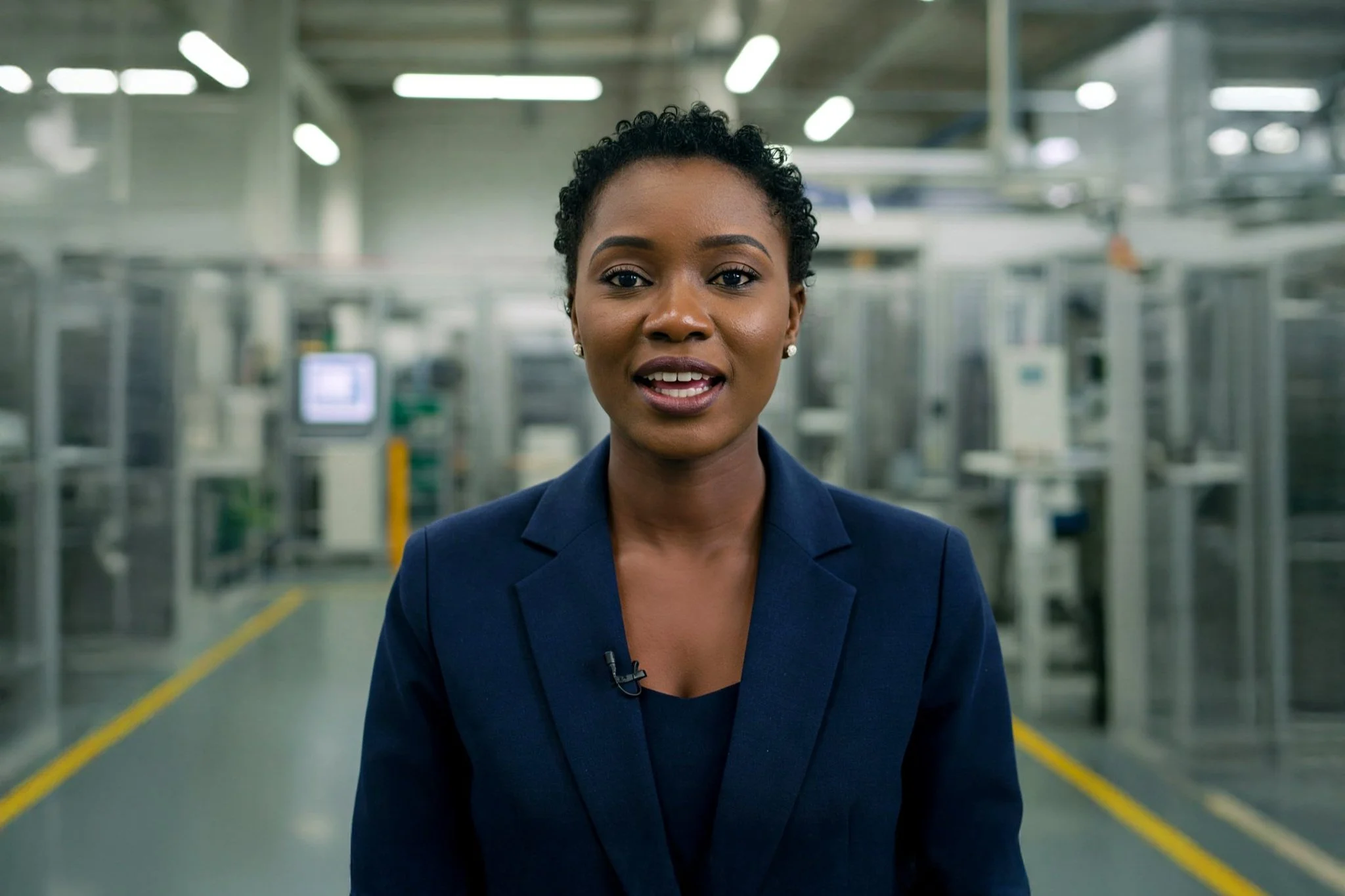
Review the images above:
Analyze the Lighting:
Note how the well-lit photo (on the right) creates a bright, clear, and professional atmosphere.
Compare it to the poorly lit photo (on the left), which appears dim, shadowy, and less inviting.
Evaluate the Room Setting:
Observe how the clean, brightly lit environment in the second photo feels professional and respectful.
Contrast this with the cluttered factory setting in the background of the photo on the left, which may feel less polished and less suitable for an interview.
Consider the Clothing:
Notice how the subject in the second photo is dressed in a color that portrays authority and complements the setting and lighting.
In the first photo, observe how the white clothing reflects the poor lighting, making the subject appear washed out and less authoritative.
Reflect on the Importance of Lighting:
Proper lighting is crucial for presenting influential women in a flattering and empowering way.
It highlights their expertise and authority, creating a professional and respectful atmosphere.
This helps build trust and rapport, which is essential for successful interviews.
Proper lighting is crucial when interviewing the influential women at the heart of this project because it ensures they are presented in a flattering and empowering way, highlighting their expertise and authority. It also helps to create a professional and respectful atmosphere, which is essential for building trust and rapport with the interviewees.
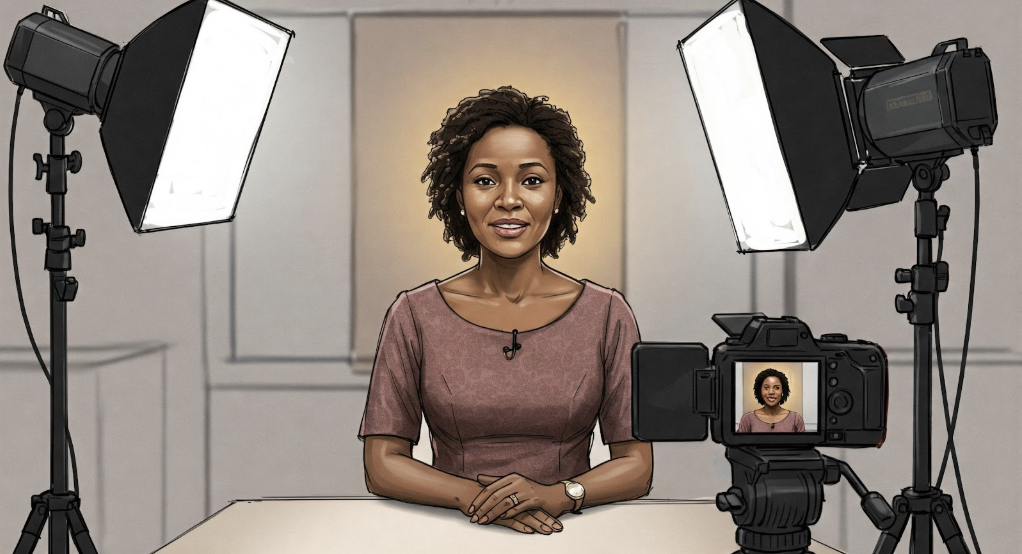
Here's a breakdown of how to light for an interview, focusing on the three-point lighting setup:
*Be sure to click on the dropdown arrows next to Purpose, Placement, Intensity, and Diffusion.
Key light:
-
The main source of light, providing the primary illumination on the subject's face.
-
Positioned slightly to one side of the camera (around 45 degrees), creating a subtle shadow that adds dimension.
-
This should be the brightest light source.
-
Use a diffuser (softbox, umbrella, or even a sheer fabric) to soften the light and prevent harsh shadows.
Fill Light:
-
Fills in the shadows created by the key light, reducing contrast and making the subject appear more approachable.
-
Placed on the opposite side of the camera from the key light, also at around a 45-degree angle.
-
Typically half the intensity of the key light.
-
Also use a diffuser to soften the fill light.
Back Light (Hair Light):
-
Separates the subject from the background, adding depth and preventing the subject from looking flat.
-
Positioned behind the subject, slightly above and angled down.
-
Lower intensity than the key light, often around 20%.
-
May or may not need diffusion depending on the desired effect.
Additional Considerations:
Light from above: Position your key light slightly above the subject to create a flattering look.
Background Light: Consider adding a separate light to illuminate the background, creating a more visually appealing scene. This helps further separate the subject.
Eye Light: A small light source placed near the camera can create a catchlight in the subject's eyes, making them appear more engaged and lively.
Color Temperature: To avoid a mixed lighting look, ensure all light sources have a consistent color temperature. Daylight-balanced (around 5600K) or tungsten-balanced (around 3200K) are common choices.
Distance: The distance of the lights from the subject affects the softness and intensity of the light.
Reflectors: Reflectors can be used to bounce light back onto the subject, filling in shadows and adding a subtle fill light without needing an additional light source.
Room Lighting: Consider the ambient light in the room. Turn off any overhead lights that might cast unflattering shadows.
Test your lighting: Before you start the interview, take some test shots to make sure the lighting is correct.
Here's a visual representation of the setup:
A common challenge faced by African videographers filming outdoors is managing exposure to prevent overexposed skies and backgrounds while ensuring women's faces are well-lit. It's crucial to avoid unflattering silhouettes and shadows to portray them authentically and with respect for their achievements. While this issue is partly due to cameras being calibrated for lighter skin tones, it's exacerbated by the often hazy and humid conditions prevalent in many parts of Africa, unlike the sunny conditions cameras are often tested in. To mitigate this, consider these tips:
👕 Subject Clothing: Advise your interviewee to avoid wearing white or light-colored clothing, as this can further complicate exposure.
🔆 Reflectors: Carrying a small reflector, even a piece of white cardboard, can be incredibly helpful for bouncing light back onto your subject's face.
🏞️ Consider the background: Choose a background that is not distracting and complements the subject.
These guidelines will enable you to create professional and flattering lighting setups for your interviews, whether you are working indoors or outdoors.
Watch these videos for great tips on lighting.